Recent years have presented communities worldwide with a difficult dilemma: how do we truly protect ourselves? Rising violence, increasing polarization, persistent threats ranging from active shooter incidents to civil unrest, and a pervasive sense of uncertainty have transformed community security from a topic that could be postponed into an urgent reality demanding immediate attention.
For Jewish communities, the challenge is particularly acute with spreading antisemitism. But the fundamental security dilemma applies broadly – houses of worship, schools, corporate campuses, and residential communities all face the same question: how do we create safety that actually works when it matters most?
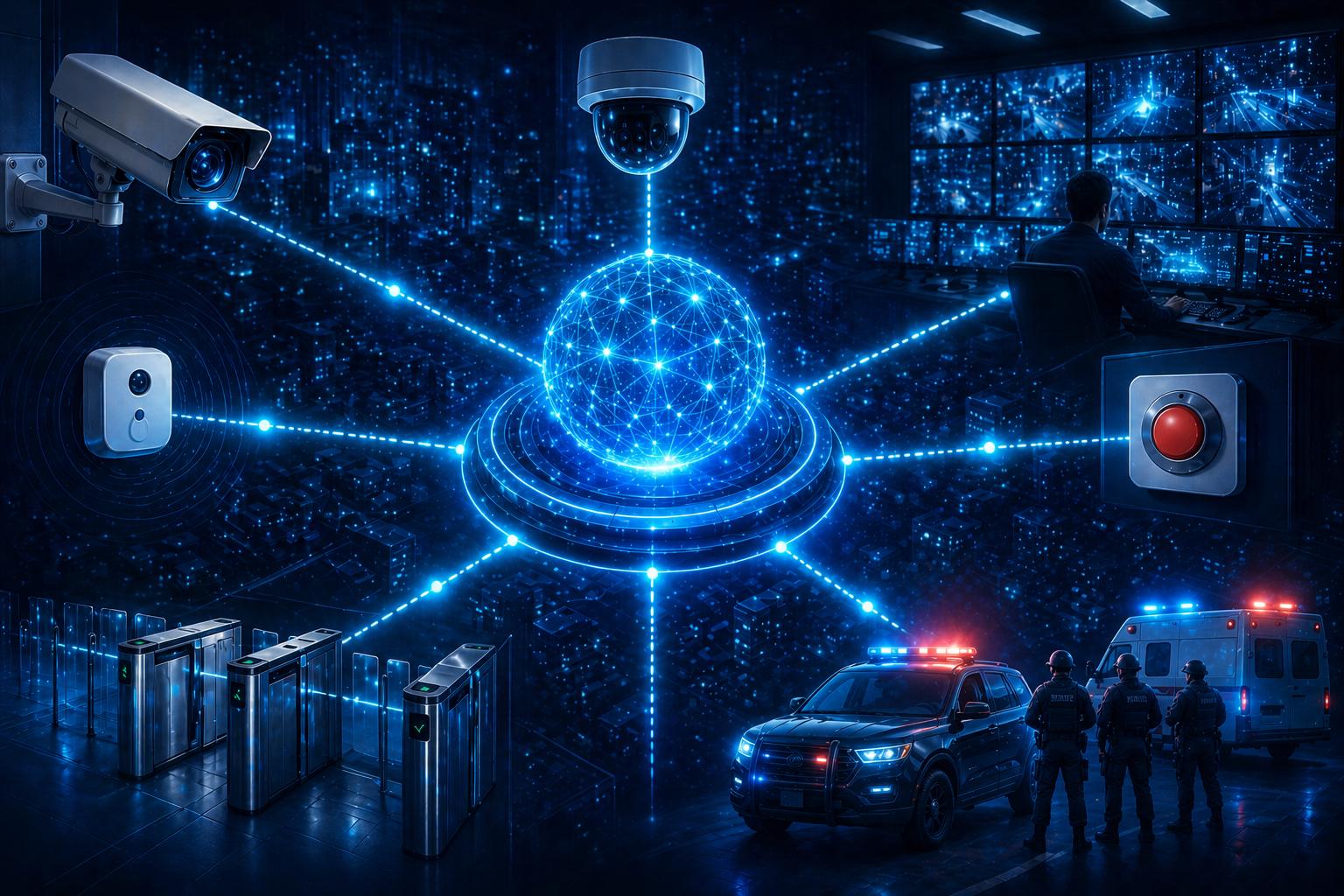
Most communities turn to the first solution that comes to mind: cameras, gates, security systems, and a few guards. And the idea isn’t wrong – these technologies are essential and effective. The problem begins when they’re the only solution.
Because experience teaches us something critical: communities that invested hundreds of thousands of dollars in advanced equipment but ignored the human component quickly discover that when a real incident occurs, technology alone isn’t enough. The cameras record, security systems sound alarms, the guard calls the police, but who coordinates the community itself? Who responds? Who knows what to do?
This gap between technological security and actual response capability, that’s exactly what our approach bridges. Not instead of technology, but together with it.
What's the Difference Between Security and Resilience?
Let’s clarify something fundamental that most communities miss: security and resilience aren’t the same thing.
Security is what tries to prevent a threat from entering. These are the cameras, gates, locks, and all of these are essential. Resilience is something deeper: it’s the community’s ability to withstand a threat when it’s already here, respond to it in an organized manner, and recover from it quickly.
Think of it this way: security is the wall. Resilience is what happens behind the wall when it’s not enough. Both are needed. Both are vital. But they must work together.
And when we look at today’s reality – threats are diverse, situations are complex, and communities are scattered – the wall alone simply isn’t enough.
The problem with one-dimensional security approaches is that they build dependency only on systems, only on guards, only on external elements. But a community with true resilience? It integrates technology with community autonomy. The ability to act, coordinate, respond, together with the best technological tools.
And that’s exactly what our model does.
The Model: How to Build True Community Resilience
At Tandu Security Consulting, we’ve developed an integrative approach that combines three components that must work together: a connected community, effective leadership, and smart technology. Not one or two – all three simultaneously.
Our model stands on five pillars:
Social-Community Capital
This sounds soft and vague, but it’s the foundation on which all technology operates. A community where people know each other, know who lives where, who needs what, and who can help with what – that’s a community where technology can work effectively.
Why? Because when an incident occurs, critical information isn’t found only in a computer system. It’s found in the connections between people. Who’s missing? Did the principal arrive at school? Where is the manager who always arrives first? Are the children accounted for, are they safe or on the way?
This information doesn’t sit in any database. It exists in a community that knows itself, and technology enables us to document, share, and act on this information.
Community Leadership
Technology doesn’t make decisions. People do. And a community without clear leadership will get stuck the first moment it needs to decide something quickly, even if it has the best systems.
Leadership isn’t just a title – it’s the ability to lead in real time. Make decisions quickly, communicate clearly, organize people efficiently. This leadership creates something critical: a sense of capability. The feeling that the community can cope, that there’s someone leading, and that the process is under control.
Systemic Readiness
This is where things become concrete. Community security cannot work in isolation from the community’s education, welfare, health, and communications. Full integration is needed.
We call this a “security-community ecosystem” – a complete system where information flows between different elements, processes are coordinated in advance, and everyone knows their role. It doesn’t depend on one person thinking of everything in the moment – it’s a system that works.
Learning and Growth
Every incident, even small ones, is an opportunity to learn. What worked? What didn’t work? Where was there lack of coordination? How can we improve?
Communities that learn from their experience constantly raise their security curve. They don’t stay in place – they improve. And this applies to upgrading technology and enhancing its capabilities as well.
Advanced Technologies - The Force Multiplier
And now, with the community foundation in place, technology can truly come into its own. Not as a replacement for the community, but as its force multiplier.
Immediate alert systems for every resident. A smart app enabling real-time reporting. A volunteer management system that deploys people to the right place at the right time. Smart maps showing in real time where teams are, where risk points are, and where reinforcement is needed. Cameras with analytics detecting unusual movements. Command and control centers centralizing all information in one place.
The fundamental difference: technology here serves the community and enhances its capabilities. It doesn’t work instead of it – it works with it.
How Does This Work in Practice?
The transition from an unprepared community to a community with true resilience requires an organized process in five stages:
- Full Assessment – We begin by understanding reality. What’s the risk level? What’s the social structure? Where are the strengths and weaknesses? What technologies already exist and how can they be upgraded? As a security company with 35 years of experience, we don’t work with assumptions, only real fieldwork.
- Establishing Leadership Infrastructure – A multidisciplinary team bringing together authorities, security, education, welfare, and volunteers. This is the body that leads the process and ensures it doesn’t remain on paper.
- Training Leaders – Not theoretical lectures. Real simulations, realistic scenarios, decision-making under pressure. Our security consultants bring real operational experience to the field and train community leaders who know how to work with both technology and people. This is part of our complete consulting journey from assessment through implementation.
- Customized Plans and Upgraded Technology – Every community is different. Our plans are tailored to each community’s specific character: its size, structure, unique challenges. And as part of the comprehensive security consulting we provide, we also upgrade the technological systems – add capabilities, improve integration, and adapt technology to real needs.
- Continuous Support – Community resilience isn’t something you build once and finish. It’s an ongoing process of monitoring, measurement, improvement, and strengthening, of both people and technology. Our security consultants stay alongside the community over time.
Why This Works: Integration Is the Key
Our experience with communities worldwide shows something clear:
One-dimensional approaches – only technology or only training – don’t provide the complete picture. They rely on one component and hope for the best. And when the situation deviates from the planned scenario, they’re not flexible enough.
Our model is integrative. It builds autonomous community response capability and upgrades security systems simultaneously. Creates local leadership that knows the terrain and equips it with the right technological tools. Adapts to changing situations, because the community and technology work together.
The result? Communities that aren’t just better protected technologically, but also feel more secure and know how to use the tools at their disposal. And the feeling of security is part of security itself.
The Approach That Sets Us Apart
What makes our security consulting different is the understanding that security is integrative. Our approach begins with strategic security planning that puts community needs first, then aligns technology to serve those needs. Communities don’t just need advanced security systems – they need systems that work with people, for people, and integrate the community at every stage.
As a security company with a team of 80 experts, we bring to the table both technological experience and deep understanding of community dynamics. With proper professional planning, we both upgrade the technology and add value through strengthening the community itself.
Our security consultants don’t just install equipment – they build capabilities. They don’t just write plans – they train people. They don’t just upgrade systems – they create a complete ecosystem that continues to work and improve over time.
Who Is This For?
Our model is flexible, modular, and scalable. It suits:
- Religious communities – synagogues, churches, mosques, and temples facing security threats while maintaining openness and welcome
- Educational institutions – schools and universities wanting to protect students and staff while building a sense of security rather than fear
- Corporate campuses – businesses seeking comprehensive approaches to workplace safety and emergency preparedness
- Residential communities – neighborhoods and gated communities looking for holistic security solutions
- Municipal authorities – cities and towns seeking integrated approaches to public safety through our Safe Smart Cities methodology
- Organizations that understand business continuity and emergency planning begins with integrating community and technology
Why Tandu
35 years of international experience, 80 experts with operational and technological backgrounds, proven projects worldwide across diverse environments and cultures.
But beyond the numbers, we understand something fundamental: strong communities are built on proper integration. Integration of people who know each other, leadership that knows how to lead, and advanced technology that strengthens the connection between them. The world’s most advanced technology won’t save a community that doesn’t know itself. But a connected community with the right technology? It’s unbeatable.
The Bottom Line
The question is no longer “how many cameras do we need” or “which security company to hire.” The question is “how do we build an integrative system that combines a strong community with advanced technology, one that can withstand crisis, respond to threats, and recover from them.”
At Tandu, we don’t just sell security systems. We build true community resilience – the kind that combines the best of both worlds and holds up when it’s really needed.
Your community deserves more than just cameras. It deserves true resilience, both community and technological together.
For more information about the Community Resilience Model, contact our security consultants at Tandu.